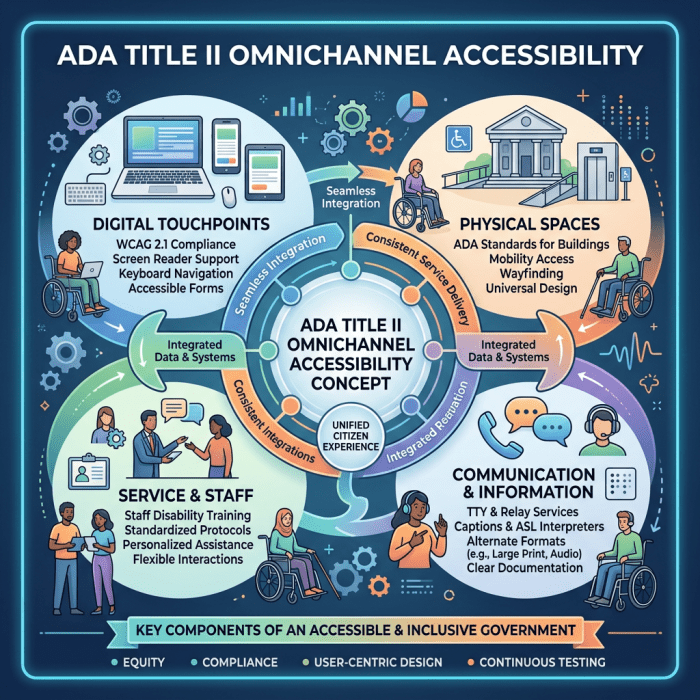
Diagram showing ADA Title II omnichannel accessibility concept with digital touchpoints, physical spaces, service and staff, and communication and information.

ADA Title II and Omnichannel: What It Is, What It Means, Who It Applies To—and Why Timing Now Matters

ADA Title II mandates accessibility for state and local governments and their service providers, emphasizing that all service channels must work cohesively to ensure equal access for individuals with disabilities. As federal compliance deadlines approach, both public and private entities are increasingly pressured to integrate accessibility effectively across their systems and offerings.

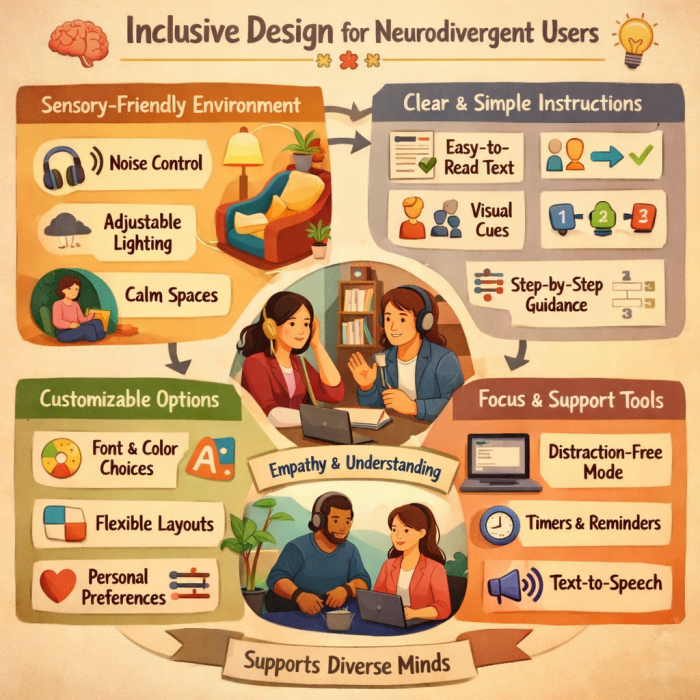
Diagram showing inclusive design elements for neurodivergent users including sensory-friendly environment, clear instructions, customizable options, and focus tools.

Designing Inclusive Experiences for Neurodivergent Users

Designing for neurodivergent users involves creating flexible systems that enhance cognitive accessibility for all. Key principles include maintaining consistency, using clear language, providing user control, and breaking information into manageable steps. Improved cognitive accessibility leads to better user experiences and operational acceptance, expanding the audience and fostering trust in omnichannel environments.

The Omnichannel Accessibility Illusion: Why “Quick‑Fix” Website Overlays Increase Legal Risk—and Break Customer Experience

Accessibility overlays promise quick compliance, but they fail to ensure true accessibility and often lead to lawsuits. No court accepts them as proof of ADA compliance, and they do not resolve underlying coding issues. Effective accessibility requires fundamental changes to website structure, not just the installation of tools.

Accessibility in Action: Why Pharma Customer Experience Can’t Afford to Treat Accessibility as Optional

The 13th Annual PanAgora Pharma Customer Experience Summit highlighted the importance of community and accessibility in customer experience. The panel "Accessibility in Action" emphasized that over 25% of adults face disabilities, underscoring the need for inclusive design. Accessibility is presented as a fundamental business and ethical responsibility for effective Pharma customer experiences.

Being Nice vs. Being Good: What Really Moves Omnichannel Forward

Many organizations struggle with omnichannel progress not due to technology or strategy, but because leaders prioritize being nice over being good. Nice intentions can hinder accountability and clarity, while effective leadership focuses on creating shared outcomes and challenging silos. Ultimately, clarity drives successful omnichannel transformation and enhances customer experience.

Why Omnichannel Fails Without Empathy—and What Leaders Can Do About It

Digital transformation has given organizations more channels, more data, and more ways to engage than ever before. Yet many customer experiences still feel fragmented, impersonal, and disconnected. From my perspective, this isn’t a technology problem.It’s an empathy problem. More Channels Didn’t Create Better Experiences Over the last decade, organizations have invested heavily in digital platforms, … Continue reading Why Omnichannel Fails Without Empathy—and What Leaders Can Do About It