
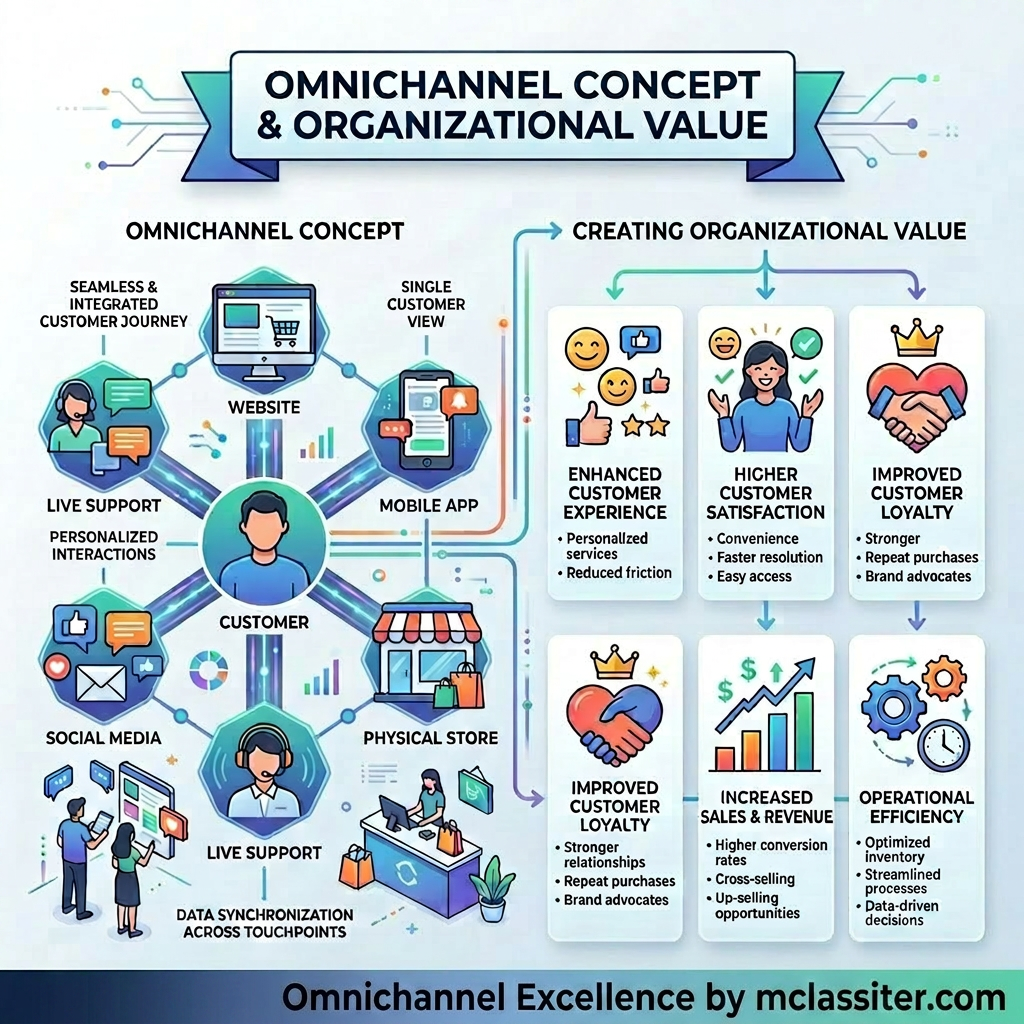
Omnichannel is one of the most widely used—and most misunderstood—terms in modern business.
Many organizations claim to “do omnichannel” because they operate across multiple platforms or touchpoints. In reality, omnichannel is not about the number of channels an organization supports. It is about how those channels work together.
At its core, omnichannel is a system‑level approach to designing and delivering experiences—one that connects people, processes, data, and technology around a single, coherent view of the customer or user.
When done well, omnichannel becomes a value multiplier across the organization. When done poorly, it becomes an expensive layer of complexity that delivers little return.
What Omnichannel Actually Means
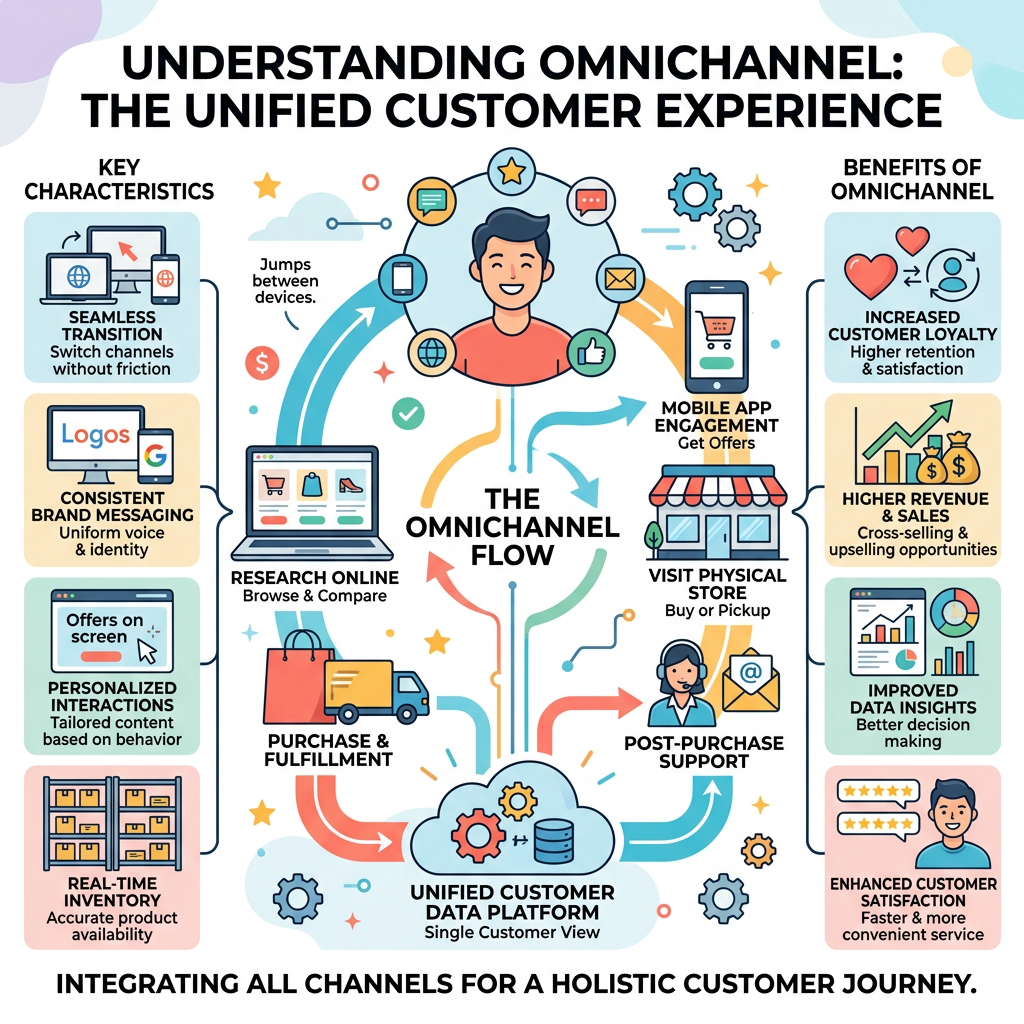
Omnichannel refers to the intentional integration of all customer or user touchpoints—digital, physical, and human—into a unified experience.
The defining characteristic is continuity.
A true omnichannel experience:
- Preserves context as someone moves between channels
- Eliminates the need to repeat information
- Delivers consistent messages, decisions, and outcomes
- Feels like one conversation, not many disconnected ones
This is fundamentally different from multichannel approaches, where channels exist side by side but operate independently. Multichannel expands reach. Omnichannel reduces friction.
In simple terms:
Multichannel is presence. Omnichannel is coherence.
Why Omnichannel Is a Strategic Capability, Not a Marketing Tactic
Omnichannel is often placed under marketing or digital teams. That framing limits its value.
In practice, omnichannel is an operating capability that spans:
- Customer experience
- Commercial strategy
- Service delivery
- Data and technology architecture
- Governance and decision‑making
Because channels are where strategy meets execution, fragmentation at the channel level exposes deeper organizational issues: siloed teams, inconsistent data, unclear ownership, and misaligned incentives.
Omnichannel doesn’t create these problems—it reveals them.
The Organizational Value of Omnichannel
When organizations invest in omnichannel as a system‑level capability, the benefits extend well beyond engagement metrics.
1. Better Decision‑Making Through Shared Context
Omnichannel models are built on a unified view of users and interactions. This enables smarter decisions—because teams are working from the same signals, not conflicting data sets.
2. Reduced Operational Friction
Disconnected channels create handoff failures, duplication of effort, and rework. Omnichannel reduces internal friction by aligning workflows across teams and touchpoints.
3. Increased Trust and Experience Quality
Consistency builds confidence. When information, tone, and actions align across channels, experiences feel intentional rather than accidental.
4. Faster Adaptation at Scale
Organizations designed around integrated journeys can evolve faster. New channels, regulations, or expectations can be layered into the system without redesigning everything from scratch.
5. Clearer Accountability and Governance
Omnichannel forces clarity on ownership—who is responsible for the experience as a whole, not just individual components.
Why Omnichannel Is Hard to Get Right
Despite its promise, omnichannel remains difficult to execute because it requires organizations to change how they work, not just what tools they use.
Common obstacles include:
- Channel‑centric KPIs that reward local optimization
- Fragmented ownership across teams and platforms
- Over‑engineered technology stacks without clear use cases
- Treating omnichannel as an end state instead of a capability
The most common failure is trying to scale omnichannel execution without first aligning on strategy, operating models, and governance.
Technology enables omnichannel—but leadership makes it effective.
What Leaders Should Be Thinking About
Executives evaluating omnichannel should ask different questions than they traditionally do.
Instead of:
- How many channels are we supporting?
- Which platform should we implement next?
The more strategic questions are:
- Do our channels operate as one system—or many?
- Where does context break down across experiences?
- Who owns the experience end‑to‑end?
- Can this model scale as expectations, regulations, or markets change?
These questions move omnichannel out of tactical execution and into strategic design.
Omnichannel as a Long‑Term Advantage
Organizations that treat omnichannel as a core capability—not a campaign or transformation initiative—tend to outperform over time.
They are better positioned to:
- Meet rising customer expectations
- Respond to regulatory and accessibility requirements
- Integrate AI and automation responsibly
- Deliver consistent experiences across regions and segments
Most importantly, they design systems that work for people—not just for channels.
The Takeaway
Omnichannel is not about doing more.
It is about connecting what already exists—intentionally and intelligently.
When organizations design omnichannel as a system, they unlock value across experience, operations, and strategy. When they don’t, they accumulate complexity that erodes trust and slows progress.
In One Sentence
Omnichannel is the discipline of designing experiences as integrated systems—and its value lies in how well an organization can align people, data, and decisions across every touchpoint.
That is what makes it not just relevant—but essential.
